
My Pregnancy Revealed the Life-Saving Power of Plasma
By: Casey Kelly
January 7, 2026
Pregnancy is full of big moments. The first heartbeat, the first kick, the first glimpse of who your child might become. And then there are moments that feel small. Routine. Forgettable.
For me, one of those moments was a shot.
During my first pregnancy, I was told that I have a Rh-negative blood type and that I would need a RhoGAM shot. No one necessarily explained to me what the shot would do, that I was carrying an Rh-positive baby, and what the risks could be, but I relied on the guidance of my medical team. What I later learned is that this incompatibility meant my immune system could develop antibodies that attack my baby’s red blood cells, which can lead to hemolytic disease of the fetus and newborn (HDFN), a rare but serious condition that can cause anemia, jaundice, and even brain damage if left untreated.
Because antibodies usually take time to develop, HDFN often doesn’t affect a first pregnancy. An Rho(d) immunoglobulin (RhoGAM) injection, a plasma-derived medicine (PDM), prevents this immune response and protects future pregnancies. At the time, it felt like a small, routine step. Just part of the process.
My first daughter, Clare, was born healthy, and although I experienced a significant hemorrhage after delivery, I recovered and moved on with my life, grateful and relieved.
Less than two years later, I was pregnant again with my second daughter, Allison. Early bloodwork was reassuring, showing no antibodies. But at 27 weeks, a routine antibody screening came back positive. I had developed anti-D and anti-C antibodies at levels high enough to put my baby at serious risk for HDFN. While RhoGAM is designed to prevent this, the doctors believe that I had a maternal-fetal hemorrhage of some sort while pregnant with Allison, somewhere between the prenatal bloodwork and the antibody check, causing the RhoGAM to fail.
From that moment on, my pregnancy was filled with fear and constant monitoring. I underwent frequent middle cerebral artery scans to monitor Allison’s health and met regularly with maternal-fetal medicine specialists, knowing how quickly HDFN can progress. I was grateful to have a skilled medical team guiding me, but the worry never left.
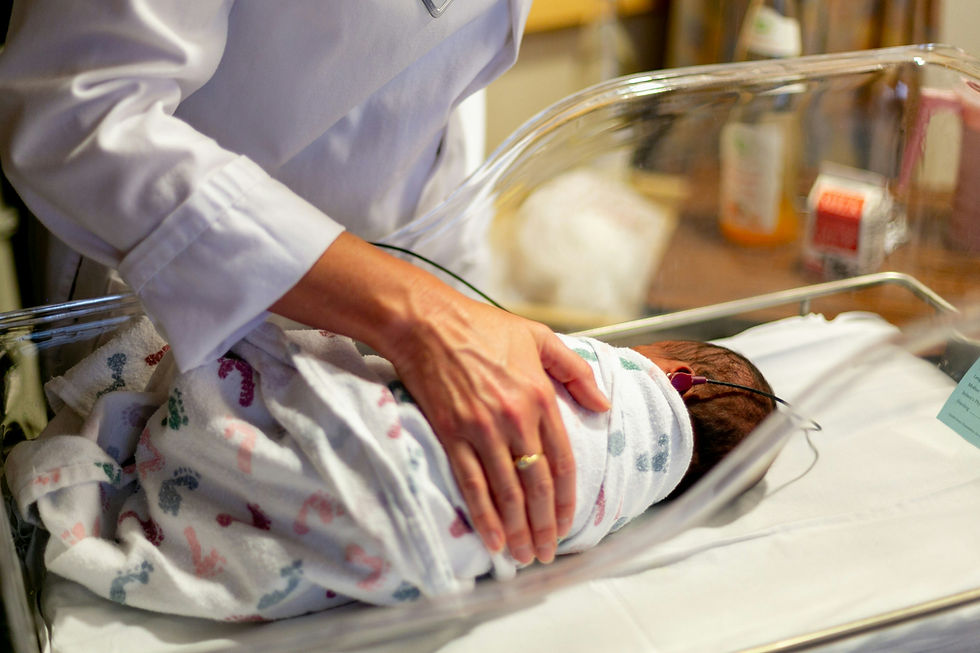
Allison was born at 38 weeks with HDFN. Initially, she only needed a few days of phototherapy, and later, we went home, feeling hopeful. But days later, at a follow-up visit, we learned her hemoglobin had dropped to 7.5. At just 12 days old, Allison needed her first blood transfusion, and again at 28 days old, along with Epogen injections to support her red blood cell production.
Through it all, I kept thinking how lucky we were to have Allison here safely. Many women don’t understand alloimmunization or the risks of HDFN when blood types are incompatible. Years after Allison was born, I learned about the nationwide RhoGAM shortage, which drove me to donate my own plasma for PDMs and future RhoGAM doses, and inspired me to educate others about what RhoGAM is and how powerful it can be.
Even though RhoGAM didn’t work for me, my experience represents a small percentage of cases, and I would not change my treatment. I would still accept my RhoGAM in my first pregnancy, knowing it was my only chance to prevent antibodies, an option women with other antibodies, such as Kell or E, don’t yet have through a PDM. And while Allison is now healthy and happy, that experience changed me.
In search of community, I became involved with Allo Hope Foundation to support others navigating HDFN and learned just how fragile and vital the supply of PDMs is for countless individuals living with rare and chronic diseases, but even more fragile for HDFN. The thing is, RhoGAM can only be made from plasma from donors who are typically Rh-negative, have levels of anti-D antibodies, and are postmenopausal or surgically sterile. To make matters more challenging, there are only a few specialty programs producing RhoGAM, limiting access for both donors and the medicine itself.

That knowledge inspired me to act. I began traveling to Indianapolis to a specialty plasma program to donate plasma myself, and I started donating my time, sharing my story, educating others about plasma donation and the life-saving medicines it makes possible, and helping those eligible to make the trip and contribute, transforming a frightening experience into purpose, hope, and action.
If you’ve ever considered donating, know your plasma has the power to change lives—sometimes in ways you may never fully see. But every donation creates a ripple, touching patients, families, and futures in ways that last a lifetime.


Comments